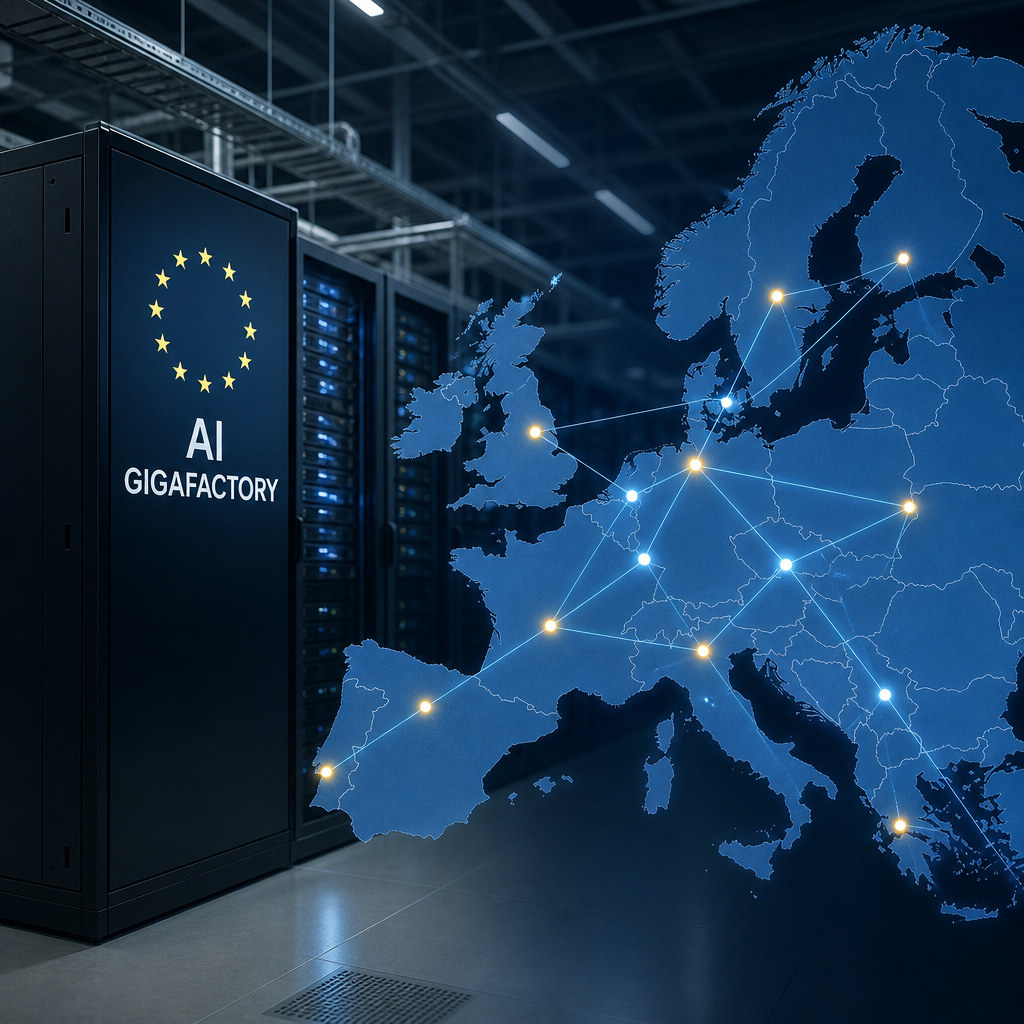
The Future of AI Manufacturing: EU’s Ambitious Network of Gigafactories
Europe stands on the brink of a technological revolution with its ambitious plan to establish a network of AI gigafactories spanning 12 countries. This initiative is not just about advancing manufacturing capacities; it’s about positioning the EU as a formidable leader in the global AI industry.
These AI gigafactories are set to transform the landscape of industrial production. Designed to integrate cutting-edge AI technologies, they are poised to enhance efficiencies and drive innovation across multiple sectors including automotive, aerospace, and consumer electronics.

The Vision Behind the AI Gigafactories
The EU’s vision for AI gigafactories is driven by a desire for technological sovereignty and economic resilience. By establishing a network that stretches across 12 nations, Europe aims to pool resources and talent to create a cohesive and competitive AI manufacturing ecosystem.
Strategic Location Selection
The 12 selected countries will each host facilities tailored to their unique industrial strengths. This strategic placement ensures optimal resource utilization and regional specialization.
Key Benefits of AI Gigafactories
- Enhanced Productivity: AI-driven automation processes dramatically increase efficiency.
- Innovation Hub: Centralized locations for research and development foster innovation.
- Job Creation: New factories bring employment opportunities in cutting-edge fields.
- Environmental Impact: Advanced technologies promote sustainable practices.
Impact on the European Economy
The establishment of AI gigafactories is expected to drive economic growth significantly. The European Commission predicts an increase in GDP and employment due to this technological push.
Table: Projected Economic Impacts
| Economic Aspect | Projected Impact |
|---|---|
| GDP Growth | +3% annually |
| Employment | 1 million jobs by 2030 |
| Innovation Index | Top 3 globally |
Technological Advancements and Innovations
Cutting-edge AI technologies will be at the core of these gigafactories, encompassing machine learning, robotics, and data analytics to enhance operational efficiencies.
Research and Development Focus
Emphasis on R&D will spur breakthroughs in AI technologies including more intuitive machine learning algorithms and robust AI-led production processes.
Potential Challenges
- Regulatory Hurdles: Navigating diverse regulatory environments across countries.
- Technological Integration: Harmonizing AI technologies with existing manufacturing infrastructures.
- Security Concerns: Ensuring data security and privacy in AI-driven processes.


