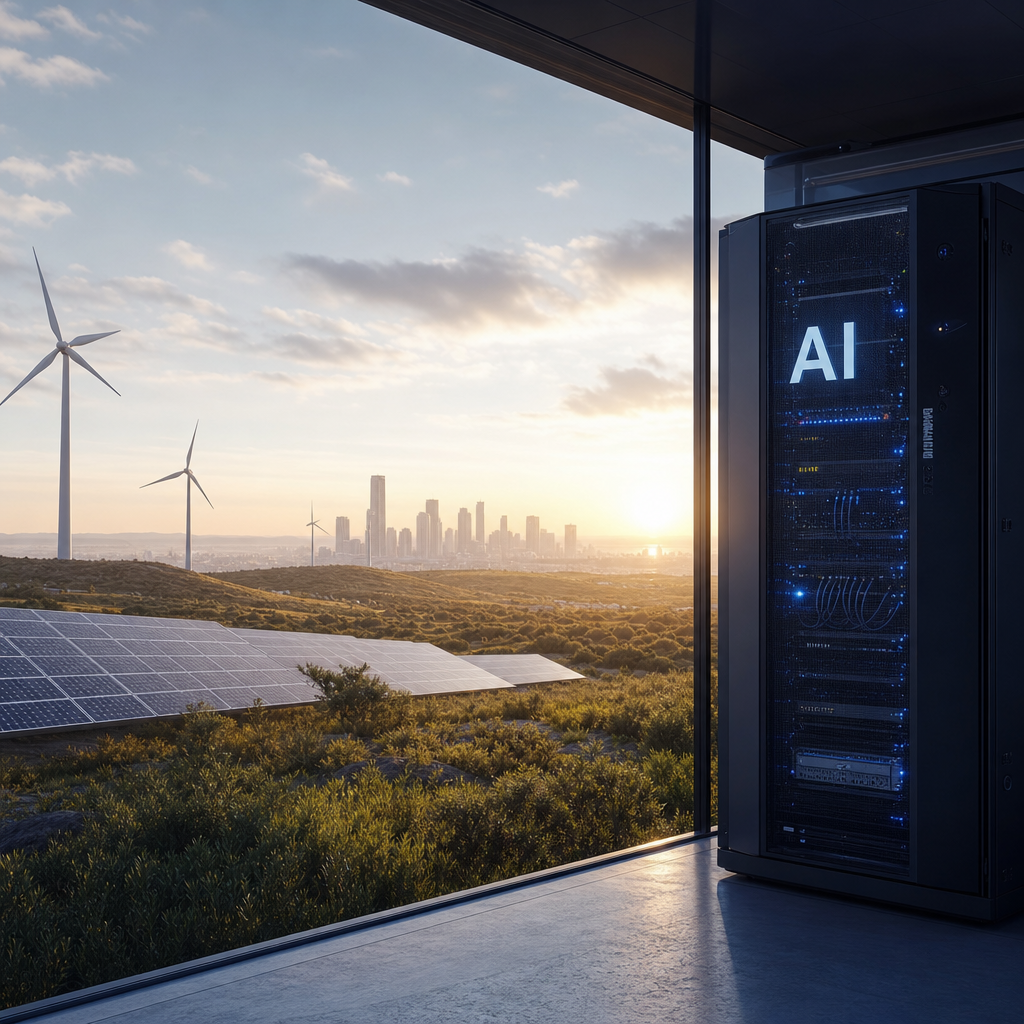
Is AI the Energy Technology the World Has Been Waiting For?
We’ve long dreamt of a world powered by boundless energy, where electricity is as accessible as the air we breathe. As we stand at the brink of an energy revolution, artificial intelligence (AI) emerges not merely as a technological marvel but a pivotal force in reshaping the landscape of energy consumption and production.
The confluence of AI and energy production promises to unlock unprecedented efficiencies and sustainability. But, is AI truly the silver bullet for our energy woes, or just another tool in our ever-expanding technological arsenal?

The Energy Dilemma: Challenges We Face
Global energy demand is skyrocketing, driven by population growth and industrial expansion. However, relying on fossil fuels jeopardizes our climatic and ecological balance. Renewable energy sources offer respite, yet they remain fraught with challenges such as intermittency and scalability.
Intermittent Nature of Renewables
Solar and wind energies are promising yet unpredictable. They generate electricity during optimal conditions but falter during cloudy or windless days. Hence, bridging this gap requires innovative solutions.
Scalability Concerns
Expanding renewable capacity is not merely a question of technology but also economic viability. Infrastructure development, grid integration, and storage advancements are essential to leverage renewables effectively.
AI in Energy: The Game Changer?
AI’s role in energy transformation extends far beyond automation. From predictive maintenance to energy consumption optimization, AI can significantly augment energy strategies.
Predictive Maintenance
AI algorithms can foresee equipment failures, reducing downtime and maintenance costs. This foresight enhances the reliability and longevity of energy infrastructure.
Optimizing Energy Consumption
AI-enabled smart grids balance energy supply and demand, improving efficiency and reducing wastage. AI-driven analytics provide insights for consumption pattern shifts.
Enhanced Resource Management
AI’s resource management capabilities optimize the allocation of energy based on demand predictions, leading to more sustainable and efficient energy use.
AI and the Future of Renewable Energy
AI’s potential extends into enhancing the efficiency of renewables. Machine learning models improve the accuracy of weather forecasts, aiding in solar and wind energy production predictions.
- Solar Energy: AI algorithms optimize solar panel alignment and predict sunlight exposure.
- Wind Energy: Machine learning enhances turbine alignment, increasing efficiency.
Case Study: AI-Powered Energy Solutions
Several companies have pioneered AI integration in energy systems. For instance, Google has utilized DeepMind AI to enhance the efficiency of its data center energy use, achieving a 40% reduction in cooling energy.
The Ethical Perspective: Balancing AI Advancements
While AI offers a myriad of solutions, its implementation must be ethically guided. Concerns over data privacy, cybersecurity risks, and the socio-economic impacts of AI must be addressed.
Data Privacy and Security
The deployment of AI systems requires vast amounts of data, raising questions about data ownership and privacy. Safeguarding this data is paramount to prevent misuse.
Socio-Economic Implications
The adoption of AI could lead to shifts in labor markets, necessitating upskilling and reskilling initiatives. Stakeholders must ponder the social implications of this technology.
Conclusion: A Catalyst, Not a Panacea
AI holds the promise of transforming energy systems, enhancing efficiency, and fostering renewable integration. Yet, it is not a standalone solution. A collaborative approach involving technology, policy, and societal engagement is essential to truly harness AI’s potential.
| Energy Challenge | AI Solution |
|---|---|
| Demand Prediction | AI-driven demand forecasting improves grid stability. |
| Equipment Failure | Predictive maintenance powered by AI reduces downtime. |
| Resource Allocation | AI optimizes energy distribution based on real-time data. |